- Business vs Pleasure…
- It's still one of the best ways to reach people…
- Too many platforms, not enough focus…
- Bots everywhere, trust nowhere…
- The algorithm doesn't want you to see who you followed…
- Pay to play, and get it wrong at your peril…
- The tools meant to simplify this have gotten complicated…
- How I manage it anyway…
Business vs Pleasure…
I’ll start with an admission that probably undermines my credibility on this topic before I’ve even made a point: I mostly use social media for information, not to engage. I scroll, I read, I follow along — and I very rarely comment, share, or post. That’s a perfectly normal way to use social media as a private individual. It’s a genuine weakness, however, when the same habit carries over into how I run BMCS’s own/related accounts, and that’s the main reason for the article.
So this isn’t a polished “here’s my social media strategy” post. It’s more an open account of why I find the whole ecosystem exhausting, and the handful of things I actually do about it anyway — because for all the gripes below, it’s still genuinely hard to justify walking away from entirely. I also wanted to get this out of my system at the beginning rather than try to explain away any negativity that may crop up in future articles as I address some of these subjects more fully.
It’s still one of the best ways to reach people…
Whatever else is wrong with it, social media remains one of the most direct ways to put your work in front of people who’d never otherwise find it. That’s a big thing, and it’s the reason “just don’t bother” was never really on the table for me, however tempting it’s occasionally felt. If you have no audience, you have no business, it’s as simple as that.
Too many platforms, not enough focus…
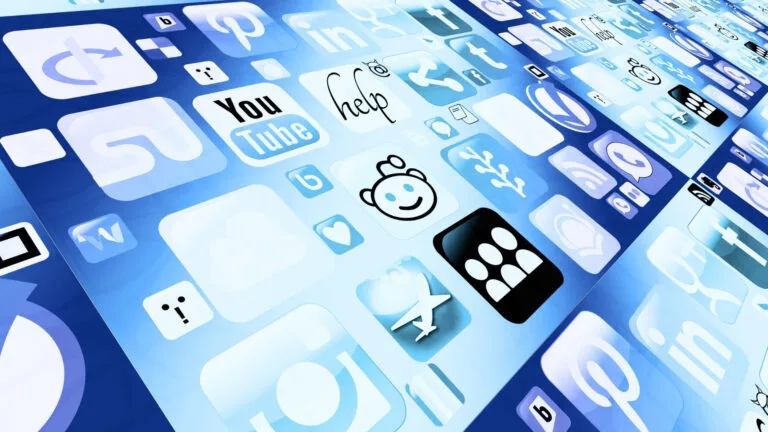
Facebook, Instagram, LinkedIn, X, Pinterest and the rest — each one wants a different format, a different tone, a different posting rhythm, and realistically, different content entirely. Trying to genuinely do all of them well, as one person, isn’t sustainable. Where you actually place your focus becomes the real question, and it’s one I don’t think has a single tidy answer — it depends on where your audience actually is, which shifts often enough that “figured it out” never quite feels permanent.
Bots everywhere, trust nowhere…
As I’m sure you are well aware, much of the activity on any given platform now isn’t real people. Follows, likes, and comments increasingly need a second glance before you can trust they mean anything, which makes gauging genuine engagement — the thing social media is supposed to be good for — a lot murkier than it used to be.
And obviously I don’t know how you perceive this in your own social platform viewing, but what a novelty it would be to click through on a headline and actually read an article related to that headline — not one about mushrooms (I’ve not gone mad, it’ll make sense in a moment).
The algorithm doesn’t want you to see who you followed…
This is the one that genuinely irritates me: I follow accounts and pages because I genuinely want to see more of what they post, and increasingly my feed shows me ads and “suggested for you” content instead, with the people I actually chose to follow disappearing from view. It feels like being actively worked against by the platform I’m asking to help me.
And just because I inadvertently (or even intentionally) clicked on a post about mushrooms, I don’t want to spend the next week scrolling through multiple posts about species of mushrooms, recipes with mushrooms, a mushroom ate my hamster etc…
Pay to play, and get it wrong at your peril…
Organic reach keeps shrinking, and meaningful visibility increasingly means paying for it. Fine, in principle — except get your targeting wrong and you’re paying a small fortune to put your content in front of exactly the wrong audience, which is arguably worse than not paying at all.
A bit of luck still plays a bigger role in organic reach than any platform would like to admit. Then, there is always the viral post, but in many cases it becomes viral as an unintended consequence not because of its intended purpose.
The tools meant to simplify this have gotten complicated…
Scheduling and management tools were supposed to make multi-platform posting simpler. Increasingly, they’ve become their own thing to learn and manage — more settings, more integrations, more to configure before you’ve actually posted anything.
And to further that point, since my last serious foray into social media, the management platforms have changed all their options and plans so that is now another thing added to the research pile (and potential new article list).
How I manage it anyway…
Despite all of that, when I do choose to be active on social media I try to stick with a process: I have some fun putting together graphics on Canva (where necessary), I keep my scheduling centralised (I used to use Hootsuite or Buffer) rather than posting natively on each platform, which cuts down the daily overhead considerably and I will randomly engage with comments if/when they appear. I’ve accepted that trying to be excellent everywhere generally means being mediocre everywhere, so I focus real effort on fewer platforms rather than spreading thin across all of them.
Generally, I just treat social media as the way people find BMCS rather than the place they actually spend time with it — I am just trying to provide some interesting and useful content here on the website, with social media doing the job of pointing an audience toward it rather than trying to be the whole relationship. Without an audience that content just disappears into a big Black Hole (hopefully now the archives background makes sense!!).
Anyhow, It’s not a perfect system. But it’s where I am at, and given everything above, that feels like enough for now but I’ll keep you posted…